
News
Learning Together: Reflections from YAG 2.0
In 2022, VFFF set up its first Youth Advisory Group (YAG) to bring the voices of young people into our decision-making as part of our Backing Young People strategy. Then in 2024 we formed the second cohort of our YAG, recruiting Gabe Francis, Kieran Lonergan, Samantha Barton and Taje Fowler as new members, and welcoming back Charlotte Watson, Elise Lane and Harrison Garlick for a second term.
Guided by the same set of principles – paying young people for their contributions, supporting them to build their capacity as advisors, and ensuring their role and contribution within VFFF was clear – we sought to build on learnings from the first term of the YAG.
The second two-year term of VFFF's YAG wrapped up at the end of May. We have taken some time to reflect on what we've learnt about embedding youth voice in our decision-making processes. El shares her thoughts as VFFF’s Program Manager and the group's coordinator, while Gabe shares his perspective as an outgoing member of our second YAG.
YAG 2.0
Gabe: The dynamic of the second Youth Advisory Group was distinct from the first as it brought together new and returning members: three experienced members who were central to forming the primary function of the YAG in its first iteration, alongside four members - myself included - who were fresh to it.
I can imagine the transition from one group to the next is a challenge for all organisations that facilitate a Youth Advisory Group. There's a tension between wanting to engage as many new youth voices as possible, while also wanting to build a knowledge bank that endures and evolves through each iteration (rather than simply rehashing itself).
I felt our group was able to successfully transition from YAG 1.0 to YAG 2.0 thanks to the balance of new and returning members. Upon entering the group, it was clear the continuing members each had different perspectives. However, their approach to the work was unified. The continuing members led by embodying the established culture of the group, which helped to orient us as new members. For the first meetings in particular, Charlotte, Elise and Harrison defined the terrain of the role, giving the group a head start in understanding our methodology and function.
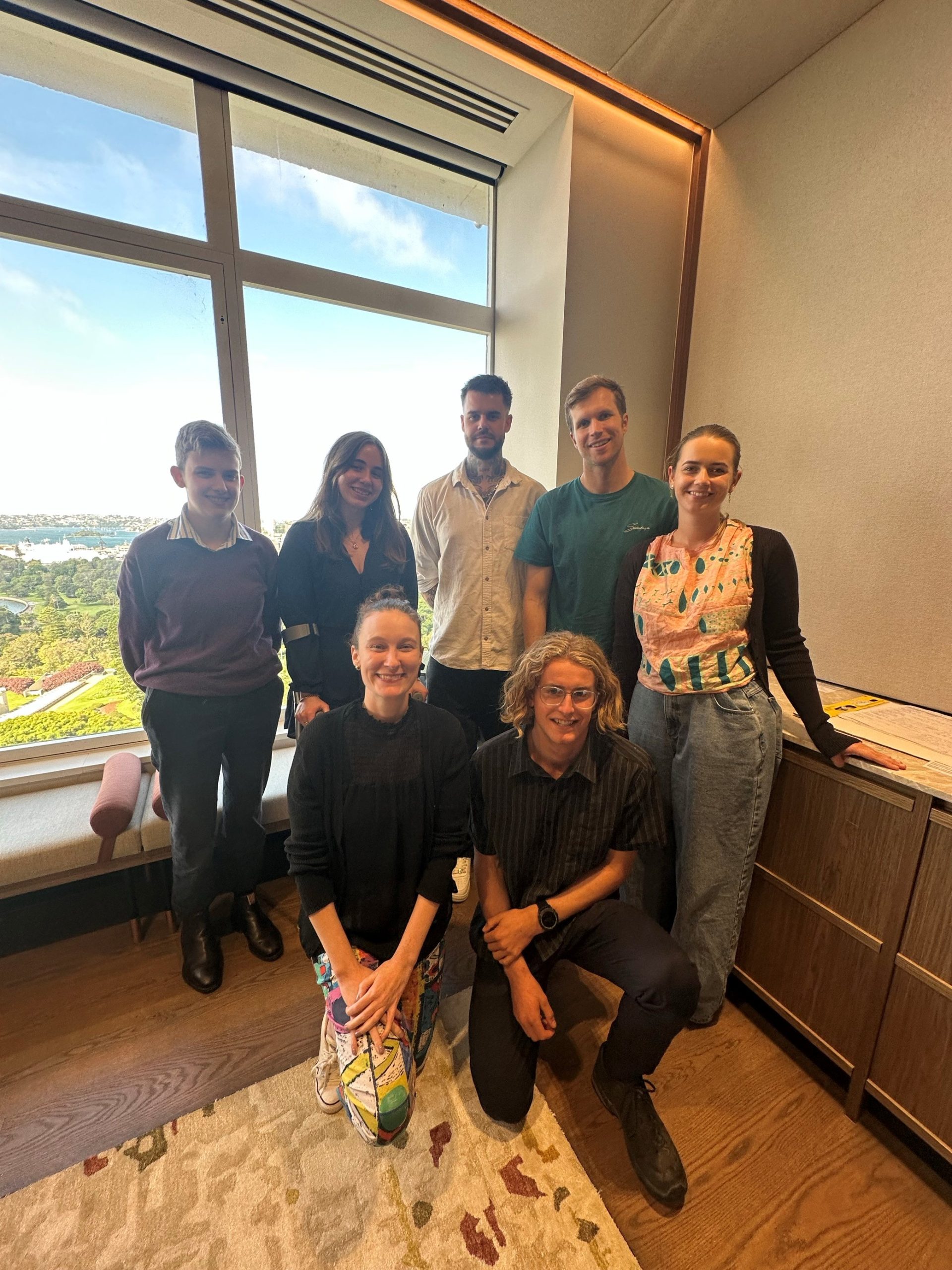
El: The YAG’s primary role within VFFF is to shortlist applications for our Backing the Future program, drawing on their lived experience as young people from rural and regional communities to assess initiatives and identify the applications that should progress to the next stage.
In her own reflection, YAG member Elise Lane shared that “the group itself has been one of the greatest gifts. YAG is a safe and expansive space where you can bring your perspective and have it challenged in ways that help you grow rather than shrink. Everyone interprets the world differently, and there is something beautiful about experiencing those differences respectfully and collectively.”
One of the key learnings from YAG 2.0 was that strong relationships are not simply a by-product of effective youth participation, they are a prerequisite for it. The quality of the group’s recommendations was strengthened by members taking the time to get to know one another, understand their different experiences and build confidence in each other’s judgement. Trust made it possible for members to disagree respectfully, lean on each other’s expertise and ultimately stand behind decisions they may not have reached individually.
For VFFF, this creates an ongoing balancing act. We want to make the most of the limited time we have with members by building their knowledge and capacity, while also creating space for the conversations and shared experiences that strengthen group cohesion. Looking back, some of the most valuable moments happened outside the formal agenda. In-person meetings, shared meals and social activities helped build the relationships that enabled the group’s work, reminding us that participation is as much about connection as it is about decision-making.
Teaching and Learning in the YAG
Gabe:
It was certainly an empowering experience to be part of the YAG and I feel that my voice was welcomed and respected by VFFF. My term on the YAG has made me more optimistic about the power individuals have to create positive change in the world. It makes sense to involve young people in making decisions that affect them. In saying this, my experience on the YAG - in particular at the beginning - revealed the gaps in my knowledge regarding the philanthropic sector as well as the diverse social impact projects we were discussing. This made our job as YAG members a little bit daunting!
To convey my perspective with confidence (or in some instances, to have a perspective at all), I was grateful we had so many opportunities to learn in the group. A big part of the learning I did was peer-to-peer. The strength of having seven members from all over Australia studying and working in different industries meant each member had a lot of knowledge to share. Additionally, I benefited significantly from the ways El and VFFF supported our learning in classroom-style sessions, Q&As, conversations with special guests, and extracurricular events. In some instances, teaching is instructional. The teacher tells the student what to do and how to think. This seems like the antithesis of what you're hoping to achieve in a Youth Advisory Group. However, from my experience, the capacity of our YAG expanded as our knowledge base did. I've always admired organisations that offer a seat at the table to young people. What I learnt from my time on the YAG is that the right kind of teaching - that mixes instruction with exploration and new experiences - helps us to assume that seat.
El:
From the outset, YAG members were not expected to be philanthropic experts. We often spoke about applying a "youth pub test" to grant applications, bringing their perspectives as young people rather than technical grantmaking knowledge. This worked well when members were reviewing projects aligned with their own interests or experiences, but it became more challenging when applications focused on issues they had little direct connection to.
What emerged was the importance of balancing lived experience with grantmaking capability. As trust developed within the group, members became more comfortable drawing on one another's expertise while still contributing their own perspectives. At the same time, we recognised that meaningful participation required more than simply inviting young people into the room. To engage confidently in robust discussions, YAG members needed opportunities to build their understanding of philanthropy, community impact, and how to assess competing priorities.
We often describe youth participation as giving young people a seat at the table, but our experience showed that it is equally important to help them navigate the conversation once they are there.
The decision-making process itself was not always neat or straightforward. With diverse perspectives and limited meeting time, the process could feel messy. Yet as the group found their decision-making rhythm, success did not necessarily look like consensus. Instead, it looked like reaching a point where every member could stand behind the final recommendations, trusting that differing viewpoints had been heard, tested and thoughtfully considered. That trust, combined with a shared commitment to learning, became one of the YAG's greatest strengths.
Another important aspect of learning was completing the feedback loop after the YAG decided which initiatives would progress to the next stage. Opportunities to hear how projects unfolded and what factors contributed to its success or challenges strengthened and complemented the YAG’s perspective.
To Gabe’s point, this mix of different ways of learning, particularly the opportunity to hear directly from Changemakers, were a key part of the experience the YAG encouraged us to lean into going forward. Operationally, the challenge is to structure these opportunities to deliver a well-rounded learning experience across the many knowledge areas in philanthropy and social impact. This continues to be an area of development within the new cohort of the YAG, but we found no shortage of enthusiasm to engage across the sector. We're grateful to the partners, peers and Changemakers who shared their time and expertise with the YAG. They played an important role in helping members grow in confidence and make meaningful contributions to VFFF's decision-making.
We’re incredibly grateful to Charlotte Watson, Elise Lane, Gabe Francis, Harrison Garlick, Kieran Lonergan and Samantha Barton for their contributions to VFFF over the past two years. Youth participation is not a destination but an ongoing journey, one that continues to evolve and adapt to the needs of both the organisation and the young people involved. This cohort has helped shape that journey, challenging our thinking, strengthening our practice and generously sharing their perspectives along the way. We thank each of them for taking that journey with us.

Sign up for our newsletter to stay up-to-date on VFFF’s activities